Showing posts with label Basic Solar. Show all posts

2018/02/19

On grid solar and net metering in the Philippines


Illustration of an on-grid solar system

In a nutshell on grid solar is about producing electricity without the battery as storage. Conventional solar technology dictates that to be able to produce and have a stable supply (stable supply in this sense means non-erratic, continuous) the system needs a battery.

But this is not the case for an on-grid solar system, see illustration. 

On-grid technology dishes out the need for a battery. The system is installed with a device called on-grid inverter. The on-grid inverter directly converts the DC electricity produced by solar panels into AC electricity and synchronizes it with the grid frequency so that it match the grid. The on-grid now acts as a parallel source of electricity. When the on grid system parallels the utility electricity from the grid (e.g. Meralco), the on grid system automatically becomes the primary source of electricity. Whenever the on grid system becomes the primary source of electricity, utility (Meralco) decreases the input supply. In the case that the house or building consumes less electricity than it needs the electricity flows out of the building and into the grid or Meralco.

The flowing out of electricity from a private building (house) is allowed in the Philippines by virtue of RA 9513 or the Renewable Act of 2008. The flowing out of electricity is called net metering in the Philippines. The electricity that flowed out of the building will be paid by the utility or by Meralco in the form of bill credit in next month billing. See below for sample of Meralco bill with a Net Metering.


Note the black box, 251 kWh was exported (flows out) from the house, with this amount of electricity flowing out, it is credited with P1147.72


On grid solar is the most economical way in using solar power systems and net metering is one of the financial incentives why on grid solar is the way to go.

(For solar energy solutions and supplies visit our website: www.eastgreenfields.com or email us at inquiry@eastgreenfields.com)   

PHOTOVOLTAIC CONNECTIONS TO A UTILITY GRID AND NET METERING

Although some homeowners have only a photovoltaic system attached to their home, many solar-powered homes and businesses are connected to transmission power lines outside their homes and businesses. The transmission lines are part of a grid system owned by a utility company. Using grid-connected photovoltaic power can have economic as well as environmental advantages for the homeowner. 


Because such homeowners are using much of their electricity from their own photovoltaic system, the amount of electricity they have to purchase from the utility company each month is reduced. In this cooperative arrangement, the homeowners get some of their power from their photovoltaic systems and some from the utility company’s grid.

What Is Net Metering? 

Net metering is a simple way of metering the energy consumed and produced at a home or business that has its own renewable energy generator, such as a solar energy system. 

Net metering enables homeowners to use their own generation of electricity to off set their consumption over a billing period by allowing their electric meters to turn backward when they generate electricity in excess of their demand. Th is program means that customers receive retail prices from their electrical utility company for the excess electricity they generate. A retail price is the price at which a utility company sells the electrical power to a homeowner or other consumer. 

Without net metering, a second meter is usually installed to measure the electricity that flows back to the provider, a utility company that purchases the power at a rate much lower than the retail rate. As of 2010, net metering for homeowners is available in 42 states. 

John F. Mongillo
A Student Guide to Energy 
Copyright 2011
Greenwood Publishing Group
Volume 2 Solar Energy and Hydrogen Fuel Cells


(For solar energy solutions and supplies visit our website: www.eastgreenfields.com or email us at inquiry@eastgreenfields.com)   

2018/02/12

SOLAR STORAGE

The biggest problem of solar power technologies is how to store the power generated for those times when sunlight is unavailable. Currently, most solar power plants do not have the capability to store excess energy from sunny days to be used on cloudy days. One option is to use a storage battery bank that will collect and store power anytime the system is producing more energy than is needed.  

Photovoltaic to Battery Storage 

A storage battery is an excellent system for supplying electricity when and where it is needed on non-sunny days when solar power is not available. Photovoltaic systems with a backup battery storage unit are used to provide electricity for power tools, lights, home appliances, telephones, and televisions. Photovoltaic/battery systems work well in remote areas where utility power is unavailable or at a distance that is so far away that it would be too costly to install utility transmission lines to a building. 


 Although batteries make photovoltaic systems more useful, they also require some maintenance. Th e batteries used in photovoltaic systems are referred to as deep-cycling batteries, the kinds that are used on many golf carts. Th e batteries are bigger than the typical car battery. Th ese kinds of batteries allow more stored energy for use each day. 
 Batteries designed for photovoltaic projects need to be handled with care. Th e fl uid needs to be checked in unsealed batteries periodically.

John F. Mongillo
A Student Guide to Energy 
Copyright 2011
Greenwood Publishing Group
Volume 2 Solar Energy and Hydrogen Fuel Cells

(For solar energy solutions and supplies visit our website: www.eastgreenfields.com or email us at inquiry@eastgreenfields.com)

2018/02/11

How much is the cost of on grid solar electricity?

By: EastGreenfields Blog

Summer is coming fast!

Air conditioners and electric fans will be at the forefront of defense against the heat associated with summer. And with this, bills bills bills.

One way to beat the heat and the bills is to install solar panels in the roof right? 

But is it a right investment? Yes it is  a very wise investment, for one reason it will last you a generation (20 years). Secondly, on grid solar are now cheap compared to 3-4 years ago when  on-grid solar was fisrt introduce in the Philippine market. And third solar produce electricity above your roof cost less than Meralco power rate. See chart below.


Meralco vs On-grid solar cost

String type on-grid solar has the most bang for the buck in terms of bills savings against cost of investment. Bills savings of a 1820 watts package may range from 43% to 52% or a monthly average of 47% of monthly electricity bill (average Meralco bill of P3,360 or 350 kWh per month), refer to below monthly savings table.


Monthly bill savings table

A modest size system (1820 watts), can contribute as much as 32% (monthly average) of the electricity needs of a typical household that consumes 350 kWh of energy per month.


Monthly on grid solar contribution

No doubt the cost of electricity produce above your roof is much much cheaper than Meralco. 

Ah yes, it will also make you feel good that you have have decrease your dependency from dirty electricity produced from fossil fuels (mainly coal.)

(Disclaimer, calculation is based on ideal conditions, see illustration)


Ideal solar panel roof installation, location (Metro Manila)


For solar energy solutions and supplies in the Philippines visit our website: www.eastgreenfields.com or email us at inquiry@eastgreenfields.com

2018/02/10

Solar Panels Do Work On Cloudy Days

February 8th, 2018 by Jake Richardson 

Myth: solar panels don’t work when it’s cloudy.

Short answer: Solar panels do produce electricity in cloudy weather. They don’t produce as much electricity as they do on sunny days, but they have been shown to produce 25% of what they produce on a sunny day, or 10% when it’s very cloudy.

Some critics of solar power say that solar panels don’t produce electricity on cloudy days. This claim is false. Solar panels can still can produce 10–25% of their typical output on a cloudy day. Obviously, this amount is much less than during periods of direct sunlight, but it is not nothing.

We may assume that solar panels thrive in hot, sunny weather, but too much heat can actually reduce solar panel output 10–25%. So, very hot weather isn’t the best condition for them. “The problem is, most solar panels’ power outputs start to degrade if the temperature of the panel goes over about 25°C. This is why, if you look at the specification label on a solar panel, most manufacturers quote the solar power output at a panel temperature of 25degC.”

This is why a solar power system might be more effective in San Francisco than in much hotter Las Vegas, even though Vegas has more sunny days. San Francisco is well known for its foggy days with cool weather, so it might be easy to assume that solar power wouldn’t do well there. However, rooftop solar power systems in San Francisco do function well. The amount of direct sunlight is reduced by fog and clouds, but solar panels function better at cooler temperatures, so the electricity output in San Francisco is still significant. Using a home solar power system there can save approximately $1,500 per year on utility bills, according to an analysis conducted by SolarCity.

You can also save $1,500 with solar power in Boston. Even though this city has such cold winters and cool temperatures in fall, solar power works well there and can considerably cut electricity bills. 

One of the American cities with the most cloudy days is Seattle, but solar power is continuing to grow there as well. “Seattle is quickly becoming one of the best cities for solar in America thanks to Washington’s great payback incentive and net-metering policy as well as the city of Seattle’s growing market competition.” 

Another one of the cloudiest cities, Portland, is also a leader among American cities in solar power — the 17th best US city in terms of solar capacity.

If you live in an area with cloudy, cool weather, you can still purchase and benefit from a solar power system, and don’t let any naysayers tell you otherwise. Sunshine is just part of the story. One major factor to consider if you are looking into buying a solar power system is the cost of electricity from your utility. If it is high or very high, of course, you may be motivated to find an alternative source of electricity, even if your region has cloudy days.

There are also two trends working in favor of solar power in cloudy places: One is that solar panels have gradually become more efficient, especially in cloudy locations. The other is that solar prices have decreased steadily, so it is more affordable to get a larger system for places with less direct sunlight.

(For solar energy solutions and supplies in the Philippines visit our website: www.eastgreenfields.com or email us at inquiry@eastgreenfields.com)

2018/02/09

PHOTOVOLTAIC CELLS COME IN MANY SIZES AND SHAPES


Photovoltaic cells come in many sizes and shapes—from smaller than a postage stamp to several inches across. Each cell is capable of producing one to two watts of power. Although this is not enough to power most appliances, cells can be linked together in modules. Modules store photovoltaic cells in a weatherproof container and may be up to several feet long and a few feet wide. 

Depending on how much energy is needed, the modules can also be linked together to provide higher voltages. Photovoltaic power plants use a few thousand modules to generate electricity for household or business uses. Because photovoltaic systems come in small and large sizes and shapes, they are able to meet almost any electric power need, whether in a small house or in a large community of homes. 

The modules, in turn, can be combined and connected to form photovoltaic arrays of diff erent sizes and power output. These kinds of arrays can be seen on the Nellis Air Force Base and on large solar farms.  

Power of a Solar Array 

Electrical power is measured in watts. A watt is a measurement of total electrical power: Volts x Amps = Watts. For electrical power, one watt is equal to one ampere of current per second. 

The power output of a single solar cell or an array of solar cells can be measured in watts, watt-hours, kilowatt-hours, kilowatt-hours per day, or even megawatts. A megawatt will produce electricity for 400–900 homes per year. Utility power plants usually measure their output in megawatts. Th e megawatt is equal to one million watts. 

 SOLAR STORAGE 

The biggest problem of solar power technologies is how to store the power generated for those times when sunlight is unavailable. Currently, most solar power plants do not have the capability to store excess energy from sunny days to be used on cloudy days. One option is to use a storage battery bank that will collect and store power anytime the system is producing more energy than is needed.  

Photovoltaic to Battery Storage 

A storage battery is an excellent system for supplying electricity when and where it is needed on non-sunny days when solar power is not available. Photovoltaic systems with a backup battery storage unit are used to provide electricity for power tools, lights, home appliances, telephones, and televisions. Photovoltaic/battery systems work well in remote areas where utility power is unavailable or at a distance that is so far away that it would be too costly to install utility transmission lines to a building. 


Although batteries make photovoltaic systems more useful, they also require some maintenance. The batteries used in photovoltaic systems are referred to as deep-cycling batteries, the kinds that are used on many golf carts. Th e batteries are bigger than the typical car battery. These kinds of batteries allow more stored energy for use each day. 

Batteries designed for photovoltaic projects need to be handled with care. Th e fl uid needs to be checked in unsealed batteries periodically. 


John F. Mongillo
A Student Guide to Energy 
Copyright 2011
Greenwood Publishing Group
Volume 2 Solar Energy and Hydrogen Fuel Cells

2018/02/08

A NEW GENERATION OF SOLAR CELLS


In 2010 many institutions and companies are developing, testing, and manufacturing a new generation of solar cells. Traditional solar cells are made from crystalline silicon, which has been in high demand, at times resulting in a shortage of crystalline silicon supply throughout the world, and which is a high-cost material to purchase. Therefore, the solar photo voltaic industry is researching and developing non-silicon-based technology, including thin-film solar cells.  

Thin-Film Solar Cells 

Solar engineers refer to second-generation solar cells as thin-film solar cells. Materials used in the production of the thin fi lms include semiconductor materials, such as copper indium diselenide (CuInSe 2  or “CIS”), gallium arsenide, and cadmium telluride. 


Engineer Steve Robbins displays a sheet of “thin film” solar cells at the National Renewable Energy Laboratory in Golden, Colorado, in March 2009. Thin film solar panels are relatively low in cost and their flexible design makes them highly adaptable. (John Moore/Getty Images)


 The term  thin film  refers not to the thinness of the film, but to the manufacturing process used to produce the solar cells. Th in-film cells are deposited in very thin, consecutive layers of atoms, molecules, or ions onto wafer-like material. Th e finished solar cell is only a few micrometers or nanometers thick.  

Thick versus Thin: Any Differences? 

Th in-film cells have some advantages over the thick-film silicon cells. For example, less material is needed in the manufacturing of thin-film cells. A thin cell is usually only 1–10 micrometers thick, whereas thick crystalline films typically are 100–300 micrometers thick and have to be cut from ribbons. 

Also, thin-film cells can usually be manufactured in a continuous, automated production process. Automated processes can assure improved product quality, lower operating costs, and better safety conditions. Finally, the thin-fi lm cells can be deposited on flexible materials such as ultra thin glass, stainless steel, or plastic in any shape. Because of their flexibility, thin-film solar cells can be used as rooftop shingles, on the exterior part of a building or facade, or in the glazing for skylights.  

How Do Thin-Film Solar Cells Produce Electricity? 

Under a microscope the thin-fi lm cells have two layers sandwiched together. The top layer is made of a different semiconductor material than the material used for the bottom semiconductor layer. Th e top layer is called an N-type—the negative charge. Chemicals in this layer allow the sunlight through to the absorbing layer, called the P-type—the positive charge. When the sunlight passes through a conducting chemical on the surface, the sunlight makes contact with a series of chemicals (i.e., indium, copper, gallium, and diselenide) that allow electrons to fl ow through a wire to create electricity from the N-type and P-type. 


John F. Mongillo
A Student Guide to Energy 
Copyright 2011
Greenwood Publishing Group
Volume 2 Solar Energy and Hydrogen Fuel Cells

2018/02/07

WHAT MATERIALS ARE USED TO MAKE PHOTOVOLTAIC CELLS?


Solar cells are made from many diff erent semiconductors. A semiconductor is a material that has the properties of an insulator as well as those of an excellent conductor. Some of the semiconductors used for making solar cells include silicon, gallium arsenide, copper indium diselenide, and cadmium telluride. All of these materials are suited to the development of solar cells to conduct electricity. 

CRYSTALLINE SILICON SOLAR CELLS 

Silicon (Si) is a semiconductor and the most common and important element in computer chip and solar technologies. It is a semimetallic, chemical element that crystallizes in a cubic shape similar to the pattern of a diamond. Silicon crystals are found in sand and quartz and are used extensively in the manufacturing of solar cells.

How Do Solar Cells Work? 

Most solar photovoltaic cells are made from two layers of crystalline silicon that have been chemically treated using a process called doping. Th e doping process gives one silicon layer a negative charge (N) and the other a positive charge (P). A solar cell is essentially a PN junction sandwiched between two layers of semiconductor materials. 


The process of producing electricity from a solar cell begins with sunlight. When the particles of light strike a solar cell, they cause electrons to be ejected from the silicon atoms. The electrons move freely from the negative layer to the positive layer through metal terminals producing electricity. A four-inch cell can produce about one watt of direct current. (Illustrator: Jeff Dixon)

Now how does the solar cell work? Th e process of producing electricity from a solar cell begins with sunlight, which contains energy in the form of photons or particles of light. When photons strike a solar cell, they cause electrons to be ejected from the silicon atoms located near the junction. An electron is a subatomic particle with a negative charge. Th e stream of ejected electrons can move freely from the negative layer to the positive layer through the metal terminals. 

How much electricity is generated from a solar cell? The typical fourinch solar cell can produce about one watt of direct current (DC) electricity when exposed to sunlight. To generate more electricity, you need to wire together many solar cells in a panel called a solar array that is encased in a watertight container for weather protection. If you need to produce a greater amount of electricity, then the panels, in turn, can be wired together. Th ese kinds of solar panels are placed on the roofs of homes and businesses to generate electricity. 

***

John F. Mongillo
A Student Guide to Energy 
Copyright 2011
Greenwood Publishing Group
Volume 2 Solar Energy and Hydrogen Fuel Cells

2018/02/05

WHAT ARE SOME USES FOR PHOTO VOLTAIC CELLS?


According to research, about 40 percent of all photo voltaic cells sold are used for producing electrical power for homes and for pumping water in remote areas. About 35 percent of them are used in transmitting and communication operations. Many lighthouses, off shore petroleum drilling operations, highway signs, and radio and telephone transmitters are also powered by solar panels. 

***

John F. Mongillo
A Student Guide to Energy 
Copyright 2011
Greenwood Publishing Group
Volume 2 Solar Energy and Hydrogen Fuel Cells

2018/02/04

Harvesting Surplus Energy, Off-Grid


By: Hugh Piggott
Published In:Home Power Magazine
Issue #179, May / June 2017


Many off-grid users of renewable energy abhor wasting energy. We obsess about load efficiency, switching off lights, and putting phantom loads on plug strips. But few people realize how much energy is wasted by charge controllers. This article can help you use most of your system’s available energy.

PV system generates electricity during the sunny hours (as do wind turbines in windy hours), but much of this energy is needed at other times, such as evenings or periods of calm. The solution to this mismatch is to store energy in batteries.

RE sources will produce much more energy on one day than on another, depending on the weather and the season. Surpluses occur when the battery and the loads cannot absorb all the available energy. Also, the rate at which a battery can absorb current tapers off as the battery approaches its fully charged state. For a battery to remain healthy, this situation ought to be commonplace, but it often results in unused energy.

The principle of charge control is to regulate the battery voltage to an optimum level for the specific stage of the charging process. The installer must program the controller with the correct voltage “setpoints” for each stage—absorption, float, and equalize. At first, the battery will need a high charging current, but this will taper off over time, even though the voltage is kept at its setpoint. A quality charge controller uses information from a temperature sensor to further adjust the charging, and it runs a timer to determine when the absorption stage is complete and the battery is “charged.” After this, it will limit the current to a very low trickle that maintains the float voltage.

A PV charge controller limits the current going into the battery bank based on the setpoints. This prevents the battery from charging too fast, which can result in damage. The downside is that it also reduces the system’s efficiency by using less energy. Wind and hydro sources are not as easy to control. If their generated output is not used, turbines can be damaged by overspeed. For these sources, we must use a diversion controller that shunts unwanted energy into a load. This “protective diversion load” or “dump load” protects the battery from overcharging and the turbine from overspinning, but it can waste energy. The key to improved efficiency is using “opportunity diversion loads” instead of, or as well as, protective diversion loads.

Lifestyle Adjustments

Most off-gridders try to get the laundry done and the floor vacuumed when the sun is shining (or wind blowing) and the batteries are full. Just as we switch off loads as the battery voltage falls (due to reduced RE), we try to use electricity when the voltage is high. We’re taking advantage of energy that would otherwise go to waste.

In my home, for example, we have a single-burner induction cooktop that does most of our cooking when there’s ample electrical energy available. It’s a great feeling to use free, clean energy and to avoid the cost and pollution of using propane that is also likely derived from fracking.

While there are aspects of this that are satisfying, constantly having to monitor system energy can be irksome. Most of us have other priorities in our lives, and that’s where “opportunity diversion” comes in. A diversion relay can often do our job better than we can because it has no other purpose in life than switching things on and off automatically. Don’t ask a relay to make your breakfast, but it can heat your water tank, pump your irrigation, or switch on air conditioning.

Diversion Controllers & Relays

One way to set up an opportunity load is with a separate controller. Use a second pulse-width modulation (PWM) controller, such as Morningstar’s TriStar or the Xantrex C-40, configured for diversion mode, to do the job of controlling the battery voltage. Keep your solar controller for the sake of its maximum power point tracking to maximize energy capture. Set the MPPT controller’s charging setpoints slightly higher than the PWM unit’s setpoints, so the PWM is activated first by rising voltage. If your MPPT controller has no means of driving a relay, then adding a second controller is a good way to set up opportunity DC water heating.

Often, your MPPT controller will “know” when there is excess power. MidNite Solar’s KID charge controller can be set to “PWM Divert” and run a DC load (like a heating element) directly on its load output. Many of Blue Sky Energy’s SolarBoost controllers can also switch loads using an internal 20 A relay, while its DUO upgrade option contains a PWM diversion control function. Most other makes of MPPT controllers offer an auxiliary output or “aux port” that can produce a 12 V signal (or close some switch contacts) when a battery voltage setpoint is reached. Connect this to the coil or input of a relay and it will switch on a load to make good use of the surplus energy.

Aux ports need to be configured for a particular “mode” that determines the criteria for switching. MidNite’s Classic and OutBack’s Flexmax charge controllers offer modes that energize their aux ports when the battery voltage setpoint is reached for the prevailing stage of charging—absorption, float, or equalization—just like a dedicated diversion controller. If you plan to use diversion whenever possible, then you should use these modes. In other MPPT controllers (and inverters), the aux port modes offer only fixed voltage setpoints. A fixed voltage setpoint for diversion will either be too low to allow proper absorption or too high to be activated during the float stage of charging. It may work well for relatively low power loads or for heating a small water tank with a thermostat that opens after an hour or so, but otherwise it will prevent your RE system from properly charging the battery.

Some controllers offer Aux port modes that signal when charging has reached the float stage. Several offer modes for a certain percentage state of charge (SOC). These modes may be worth considering for operating motorized opportunity loads, such as irrigation pumps that can only work at full power. But they will miss out on the gradually rising surplus of power that occurs during the absorption stage.

High-array-voltage triggers are another possible mode to use for diversion. If the controller is rejecting surplus PV power, then the array voltage will rise beyond the maximum power point. You can choose an Aux port mode to trigger diversion as the array rises a little above its normal, observed MPP voltage. This should not interfere with the battery’s ability to achieve absorption voltage setpoint, but your trigger point may be a moving target. This mode is ideal for hydro turbines, but less so for PV arrays, as the energy capture drops fast as the array voltages rises above MPP voltage and the MPP voltage will vary with array temperature.

Relays

A relay is a switch for high current that is operated by a tiny current. Older mechanical relays use an electromechanical solenoid to close physical contacts. They can open and close many thousands of times but will eventually wear out. Choose these relays for modes that cycle on/off over periods of minutes—for example, driving motorized loads. Use a “plug-in” relay that is easy to replace every couple of years.

For more rapid cycling (many times per second) conditions, choose a solid-state relay (SSR) that uses semiconductor technology. SSRs are more costly and they need a heat sink, but they can be driven fast enough to implement pulse width modulated (PWM) switching that ramps the average diverted current up and down smoothly.

Use a solid-state relay (SSR) when you need frequent, rapid switching. For example, an OutBack or MidNite controller’s Aux port in PWM mode linked directly to the input terminals of a Crydom D1D40 SSR can reliably modulate a DC load up to about 25 A at 60 V (2.4 ohms, 1,500 W). Mount it on a heat sink rated for less than 2°C temperature rise per watt. You can also use an AC SSR to switch AC loads via the inverter, but a heavy load may cause your lights to flicker as it pulses.

When choosing a relay, make sure the is rated well above the working voltage and current. As with most products, they have a higher failure rate when pushed to their limits, so good safety margin, such as a factor of two, is wise. Some relays are designed for AC, and some for DC—which require heavy-duty contacts due to arcing potential. Aux ports typically provide 12 V, which will work for most SSRs. If you only have aux contacts switching 48 V battery power, it would need to somehow be stepped down below 30 V to be usable for SSR input. Mechanical relays can be found with many different coil voltages, including 48 V DC.

You can set your relay to operate a DC heater that draws current directly from the battery. But if your inverter is large enough, you may prefer to divert to an AC load, which has the same effect. The Aux ports in OutBack inverters have an “AC diversion” mode that prevents overloading the inverter. Irrigation pumps and air conditioning are among the possible loads, along with AC water heating elements. (Note that 120 V or 240 V heaters are easier to find than battery-voltage ones, and most thermostats are not designed to switch high DC currents.)

Water-Heating Elements

The most popular opportunity diversion load for off-grid PV systems is an electric heating element in a large hot water tank. Heaters do not care whether they get AC or DC, but they are sensitive to voltage. For example, a 1,600-watt 110 V heater will only give 400 W at 55 V as a diversion for a 48 V battery system. Half the voltage means half the current, and thus only one-quarter of the wattage.

When choosing the heating element, there is no need to aim for high wattage. Diverting low power steadily works better than a very powerful heater. The big load will switch on and off frequently when there is only a small excess, cycling the battery and creating power quality issues, such as flickering lights. Higher power loads also need heavier wiring. If the controller’s aux mode works at a fixed voltage setpoint, then it is preferable to use a lower-wattage diversion so that the battery can still reach full absorption voltage later in the day, even with the heater active.

If you cannot find a standard AC water-heating element that works at your battery’s voltage, then you can buy DC elements online. Often, these have multiple subelements that can be configured in series or parallel to match your system’s battery voltage and optimum power. For safety’s sake, put a notice next to the drain valve to remind you where to turn your heater off before you drain the tank!

Safety & Thermostats

Even a small heater operating over a long period can produce dangerously hot water. The conventional solution is to use a thermostat to turn the heater off. But switching high DC current may damage a standard thermostat.

One solution is to use an AC water heater that draws power through the inverter. Another is to use a very large tank which, due to the greater volume of water, will be less likely to reach scalding temperatures. A third option is to wire the relay-control signal through the thermostat, so that when it opens, the relay turns off the heater or diverts the current to another load.

If you use a PWM diversion controller to run your water heater, then various strategies are possible. The TriStar has a battery-voltage-sensing circuit that can be wired via the thermostat. When the contacts open, the sensing is diverted through a diode string. A couple of diodes step the voltage down by a volt or so, making the controller think the voltage has fallen, and it turns off the heater. As the actual battery voltage rises further, the MPPT controller starts to limit the charging rate, so the TriStar is defeated. Be aware that a voltage difference exceeding 5 V will produce an error in the controller.

The Generator Paradox

A minor challenge arises when a generator is connected to an inverter-charger, as the inverter-charger attempts to push the battery voltage up to its own charging setpoint. Often, this is coordinated with the MPPT controller’s setpoints in a control system common to both. If the diversion controller has a lower setpoint, it will divert generator power as if this were another opportunity to harvest excess PV energy—but it is not. You can defeat the diversion load using a relay that opens its (normally closed) contacts when its coil is energized by the generator’s AC voltage. The relay may simply interrupt the heater circuit, or again be used to distort the battery sensing of a TriStar controller (as before).

Wiring Examples

Choose wire with suitable ampacity and temperature rating, and also check that the voltage drop is acceptable. You need appropriate wire terminals, circuit breakers, and a heat sink or relay socket. Conform to all local codes, and hire a professional electrician if necessary. Read the manuals and plan how to program your controller(s) to optimally charge your particular battery type. In some cases, you may find useful videos on YouTube.

The diagrams show some of the possible wiring configurations for using relays to drive diversion loads based on signals from aux ports in MPPT controllers. Before you start, shut down any turbines and turn off all circuit breakers, starting with your PV array. Take note of the polarity of the wiring between the aux port and the SSR input, connecting positive to positive. Connect the positive of the SSR output to the battery positive busbar through a suitable breaker that is rated above the heater current and below the wiring ampacity. Double-check that everything is correct before powering up the system.

Looking Beyond

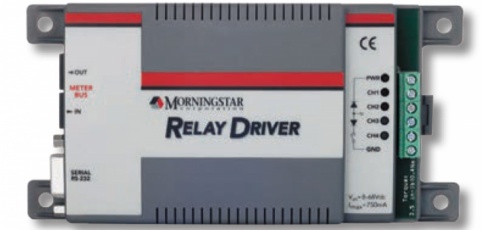
There are other techniques for harvesting surplus PV energy. For example, Morningstar’s Relay Driver can be networked with charge controllers and programmed with a computer to operate diversion loads according to a wide range of criteria. Another method uses the diversion controller’s DC load output as a signal to trigger a special type of SSR that modulates the inverter’s current to an AC heater using phase-controlled switching. This combines the convenience of a conventional AC heating element with the smoothness of PWM control—but it’s a component-level project beyond the scope of this article.

This is a fascinating arena for creative homebrew, but “turnkey” products are rare. It’s sad to think of all the solar energy that is wasted because manufacturers and installers consider it such a low priority.

***
Locally in the Philippines we have 2 projects that we have set-up as off-on grid hybrids. 1 more is in progress/design stage.

For hybrid set-up in the Philippines, please visit our website: www.eastgreenfields.com or email us at inquiry@eastgreenfields.com

2016/07/06

Common Misconceptions When Buying Solar


Reference: BY DAMAN COLE APRIL 27, 2016 IN MARKETS, TECHNOLOGY
Yingli Blog

As one of the fastest growing industries, there are many opinions and marketing taglines used which ultimately result in many misunderstandings.

Below are contradictions that you may have come across before:

1. All solar panels look similar, are they the same?
With over 500 brands that have been sold within the Australian market (between 2011-2015), it’s difficult for even an experienced professional to tell the difference. Accepting the idea that the label or datasheet has typical information as below – doesn’t mean they’re all the same:


  • 10 year product warranty
  • 25 year performance warranty
  • Power class rating (eg. 250wp/260wp)

The manufacturers around the world have gained the majority of their market share through their ability to manufacture high standard products, which demonstrates a high level of research & development including exposure to different types of environment and life cycle tests. These are seldom regarded as important in the eyes of many retailers and consumers.

The best way to determine global exposure is asking for project references in other countries. Chances are if evidence can be provided that the products are used in larger projects in a number of other markets – there has been enough due diligence to suggest it will work for you in your market.

2. Kilowatts & Kilowatts – (kW, kWp, kWh)
Traditionally there is much confusion on this topic for non-technical buyers. Also, it’s commonly referred in the retail spaces that you are buying a system size.

For example, solar systems in Australia are sold as “5kW systems”, but really should be sold as 5kWp.


  • The ‘p’ indicates “peak”, as in the amount of power being generated at peak production (being 1,000 w/m2 irradiance of direct sunlight).
  • Kilowatts are the measurement of energy units. When referred as kWh (kilowatt hours), it means the energy used at a constant rate over a period of time.
  • Referencing of kW or kWp does not indicate the yield or likely performance over a day, week, month or year – providing an unrealistic outcome of the solar system’s potential. It’s like saying a car that drives at 200km/h is a “200km car” – where in truth it’s only highlighting the ‘peak performance capacity’.

Once again, if larger global projects have specified and used a nominated brand of product, it is because their independent and technical due diligence suggests there is high level of confidence in a manufacturer’s ability to consistently create a product that generates a reliable quantum of electricity generation year on year.

3. What does “Tier 1” mean?
The solar industry has struggled for years with a methodology to rank and assess the relative strengths of PV manufacturers. In the absence of a true quantifiable testing regime, many have resorted to the views of financial analysts. In many instances, the industry use this term as a mean of quantifying quality, without placed onus on any specifics.

The tier system is a ranking structure used by varying financial analysts and firms. The most commonly accepted definition is based on “bankability”, which ultimately is a determination based on whether projects using the solar products are likely to be offered non-recourse debt financing by banks.

Other definitions and interpretations of ‘tier-ranking’ have included theories around vertical integration of product, presence of a local office and support, all of which indirectly suggests a level of product quality or after-sales support.

Tier-ranking can be highly subjective without substance of what it actually defines.


YGE Global - Photos - R&D, Lab, Testing - 01

4. Does the country of origin affect quality of a solar panel? German made or German engineered, is it better than all others?
The reference of a product’s country of origin is an age old method of oversimplifying quality, by providing an emotive feel good to buyers – which supersedes the requirement for further due diligence.

Solar PV has been one of the most rapidly expanding industries within a manufacturing sector for years, however with this rise, it has seen significant players trip, if not fall through this massive growth phase. Many manufacturers prefer to diversify their base and expand by opening many plants around the world. It simply isn’t fair to assume a quality of engineering or product based on the location of where product is assembled or where the headquarters of the business is operating.

It’s deceptive and misleading to suggest the quality of a product can be determined solely from its country of origin, especially if the suggestion is that a product made in Asia is created to a lesser standard, when compared with other non-Asian markets. In 2013, it was reported that over 90% of solar panels imported to Australia were made in China, despite the popular non-Chinese brands being prevalent in the offers from retailers.

With such high level of market penetration from solar PV brands from China, the quality gap is broad, making the importance of differentiating quality is why some manufacturers stay in business and others don’t.

5. Doesn’t all solar PV manufacturers provide the same warranty protection?
Australia is one of the world’s most dynamic retail residential markets, and with a flood of messages in the industry, it has been easy to think that if a solar panel offers a 25 years (performance) warranty, then you will be protected?

This is true, but only to an extent.

The 25 years warranty is a performance warranty pertaining to minimum expected performance or output year on year. This is separate to the performance of the system as a whole, which is subject to the system design and performance of other components.

Although many customers are sold on the belief that there would never be a fault, this is largely misleading and for the following reasons:


  • The technologies are well proven, so are installation done by people, and human error is always an unquantifiable risk.
  • Transportation risk can affect a product, it’s unlikely that defects from transportation show.
  • The technology is exposed to the outdoor environment, which is subject to wind, rain, dust, dirt and bird droppings, trees, twigs, possums – just to name a few.

So, do buyers ask – what is the process in the unlikely event of fault or failure?


  • How do I know?
  • Is the system being monitored? Is the monitoring only for the homeowners viewing, or is there a back to base system which communicates to you, the owner and also the installer?
  • What happens if you don’t know or can’t find the installer?
  • Who supports the installer?
  • What are your consumer rights?
  • Do the major component suppliers have a local representative? If so, who are they and what is their phone number?

Performance warranties are valid if there is adequate evidence to suggest your performance is less than designed. Regardless, an assessment will need to be done, preferably by the company or installer who sold you the system. If they cannot be found, then buy from a reputable and industry-qualified professional.

6. It’s all about price!
It’s a common reality in buying anything, when in doubt, select the best value for money. This suggests that value has been presented, on the contrary, the lowest cost solar is no exception. In many instances, the lowest cost components generally require a higher level of repair and replacement – the consumer may not be aware of this, and it will cost them more in the long run.

With any capital investment, you want certainty in the unlikely event of any fault or failure, above and beyond long-term guarantees.

It is strongly encouraged that you conduct research about some technical differences, and have a list of questions about how you will receive after-sales support and service. The reality is if you don’t understand the differences, the only value you can see is one based only on the price.

7. Capabilities of product and installer
With such an expansive list of products and installers – it can be difficult to know the good from the not so good. The buying market has no point of reference to determine if a solar panel or inverter is good versus average – as it is based on Clean Energy Council’s approval.

Aside from generic references, which are meant to instill confidence, like “we have installed over 3,000 systems”, there is no means for buyers to understand the experience or quality of services they are paying for.

One of the biggest concerns is whether the installer is based locally, and we suggest you to ask these questions:


  • If the installer does not have a local office, have you enquired their service standards and response times in the unlikely event of a fault?
  • What is the policy and commitment of the after-sales service?
  • What is their responses time frame?
  • Is there a difference in receiving service within 48 hours or over 4 – 8 months?

There are many fantastic and integrated installers in the market but unless a series of questions are being asked, how will a solar buyer know? The age-old method of testing this is to ask for references, preferably from people in similar situations as you, and a customer who had bought from them previously.

We encourage those interested in solar to do their research, the team at Yingli Solar are available to help answer any products, services or technical questions you may have!

We in the Philippines can help you to install Yingli Solar for your energy needs. Please send your email to inquiry@eastgreenfields.com or call/text 0917-8232530.


2016/05/25

PV Generation System sizing

Selecting Appropriate PV Array String Sizes
By: Kent Osterberg
Reference: HP online magazine

To appropriately size a PV array to an inverter, it is necessary to make sure that the:

•           PV array never generates more voltage than the inverter’s maximum allowed input               voltage
•           Voltage remains within the inverter’s maximum power-point tracking range
•           Current is within the inverter’s maximum current and short-circuit current                                specifications
•           Power rating is appropriate for the inverter.

Equipment Specifications

Module specs can be found on the manufacturer’s data sheet or on the back of the module. The values shown in the table are for a 54-cell module. The manufacturer includes a temperature coefficient for the peak power voltage. If the temperature coefficient for peak power voltage is not published, then the temperature coefficient for peak power, in percent, may be used as an approximation. Similarly, inverter specs may be found on the inverter data sheet or its label.

Temperature Data

Because a PV module’s output depends on its temperature, calculations also must account for the lowest and highest possible site temperatures. One source for record temperatures is weather.com; another is SolarABCs.org, which has an interactive ASHRAE data map. A table of ASHRAE temperature data can also be found in “Expedited Permit Process for PV Systems” at SolarABCs.

For the first computation, which low temperature should you use—the ASHRAE tables’ “extreme minimum” or the record minimum from the local weather station? The “extreme minimum” is a little misleading—half of all years will have at least one day that is colder than this temperature. The “extreme minimum” is actually the average annual minimum temperature. Since inverters should never see a voltage that exceeds the maximum input voltage, I choose to use the more conservative method—the record low temperature. If you use the “extreme minimum” temperature, you may get one extra module in the string, but on some cold winter day, that extra module may result in damage to the inverter or void its warranty.

Calculate the Maximum Number of Modules in Series

The equation to solve for the maximum number of modules in series is:


Using example data from the table:


Since we have to work with whole modules, 15 modules is the maximum that can be wired in series.

Calculate the Minimum Number of Modules in Series

There are two factors to consider—PV module output degradation over time, and the effects of high temperature. Most studies of PV module degradation focus on power, concluding a median value for module power degradation of about 0.5% per year. Recently, the National Renewable Energy Laboratory (NREL) studied 12 mono- and poly-crystalline PV modules to see how the current and voltage parameters change over time. Relative to determining inverter string size, the significant finding was that 10 out of 12 modules showed less than 0.2% per year degradation in Vmp, with Voc remaining essentially unchanged. Since we’re estimating a PV module lifespan of more than 25 years, we need to consider that Vmp may drop by 5% over the system’s life: 0.2% per year × 25 years = 5%.

For the temperature factor, the ASHRAE “annual design dry-bulb high temp” value (either 2% or 0.4%), or the record high temperature may be used. The 2% temperature factor means only exceeding 2% of the time in the months of June, July, and August. The 0.4% temperature factor is only exceeded 0.4% of the hours during the hottest month—but there may be other months that it is exceeded. The temperature selected will determine how many hours every year the inverter may deviate from the maximum power point voltage.

Using the 2% temperature value will result in about 42 hours over the summer when the inverter may operate off its peak power point. With the 0.4% temperature, the inverter may operate off the peak power point for three hours during the hottest month of the year, and probably a similar number of hours for the other two summer months. If the record high temperature is used, the inverter should always be able to track the maximum power point. Since a small energy loss is far less critical than an inverter failure, there is no need to be conservative about which one is used. The sample documents provided in “Expedited Permit Process for PV Systems” use the 2% value. In my Oregon location, to be eligible for incentive money, I’m required to use the more conservative 0.4% temperature, which is used in the following calculation:


The minimum number of modules in series is 13 modules:


Since these modules are sitting in the sun and heating up during the day, the PV cell temperature will be hotter than the ambient air temperature and thus a temperature “adder” is used to estimate the PV module’s cell temperature. Different temperature adders are used depending on the array mounting method (see table). This example assumes a roof-mounted array, for a temperature adder of 35°C.

Find the Maximum Number of Module Strings

The maximum number of module strings in parallel is the smaller of:


No temperature corrections are used because they are extremely small for current and because the inverter will simply clip power (rather than sustain damage) if current is higher than it is rated for.

Sizing the Array

Since PV modules generally operate at lower output compared to their standard test conditions (STC) rating, inverter manufacturers commonly specify a maximum array size up to 125% of the inverter output rating. Given a 4,000 W inverter, up to 5,000 W of PV modules (4,000 × 1.25) could be installed. In this example, the maximum number of modules would be 5,000 W ÷ 190 W per module = 26.3, i.e., 26 modules.

The possible combinations that may be considered for this inverter are: one string of 13, 14, or 15 PV modules or two strings of 13 PV modules. If we go with two strings of 13, we have a final array size of 4,940 W. Note, since one string would be at most 2,850 watts, it would be appropriate to select a smaller inverter for a single string of modules. But keep in mind the calculations will have to be repeated for the smaller inverter.


***

For residential/commercial roof top projects please email us: inquiry@eastgreenfields.com or visit our website: www.eastgreenfields.com